This post may contain affiliate links. This means if you click a link and purchase an item that I recommend, I will receive an affiliate commission at no extra cost to you. All opinions are my own.
Unfortunately, many Cricut business owners make the mistake of pricing products based only on material costs or what competitors are charging. The problem is that this approach can leave you working long hours without making much money.
Learning how to price Cricut products correctly helps you cover expenses, pay yourself, and build a profitable business. Here are some practical steps to help you price your handmade products with confidence.
1. Calculate Your Material Costs
The first step is determining how much it actually costs to make each product. Include every supply used to complete an order.
For example, if you’re creating a personalized T-shirt, consider:
- Blank shirt
- Heat transfer vinyl
- Transfer tape or other application supplies
- Packaging materials
- Shipping supplies, if applicable
Don’t forget smaller expenses like ink, adhesive, labels, and ribbon. These costs might seem insignificant individually, but they add up over time.
If you purchase supplies in bulk, calculate the cost per item rather than using the entire purchase price. This gives you a more accurate understanding of your production expenses.
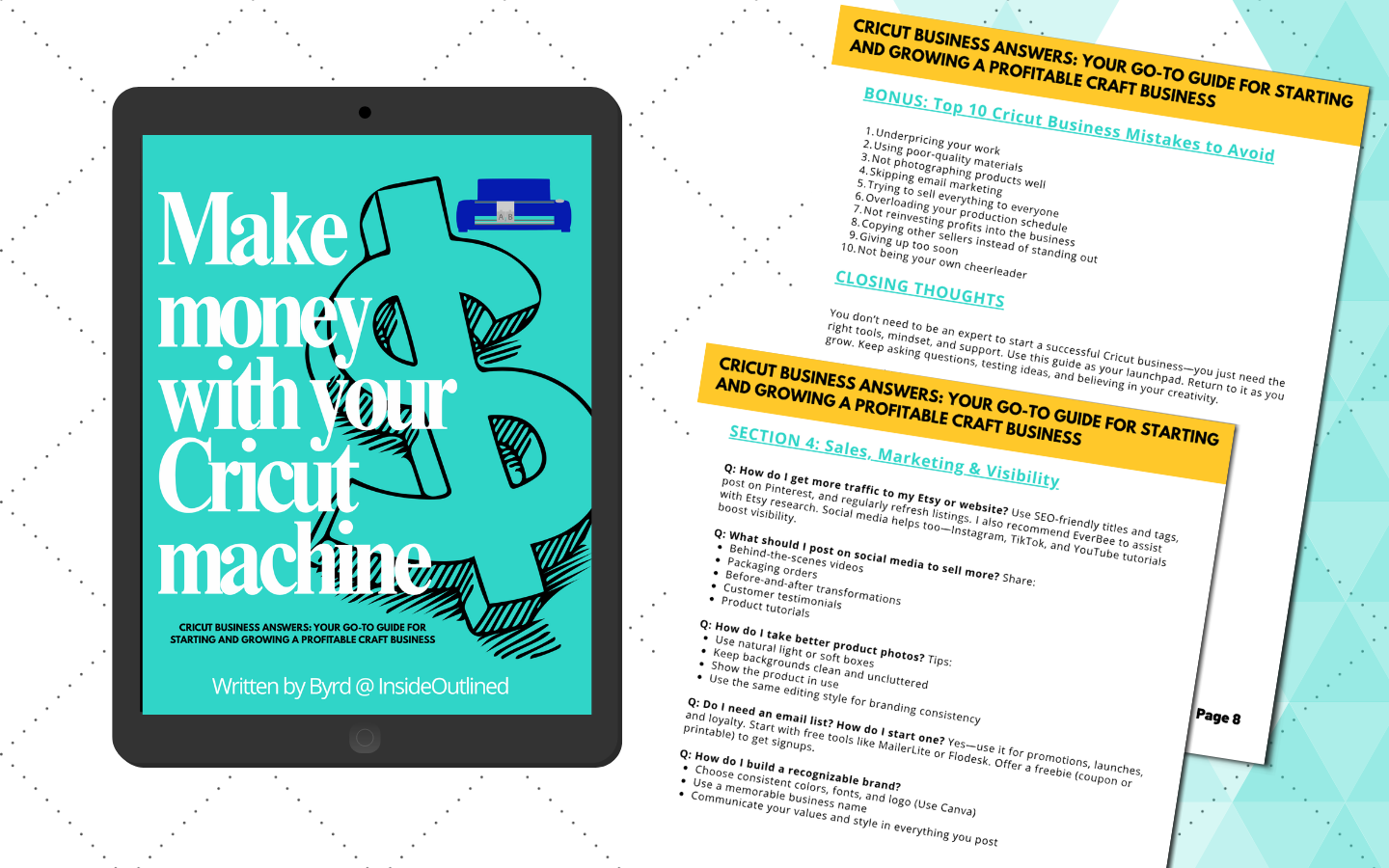
For additional Cricut business resources, visit the InsideOutlined Store.
2. Pay Yourself for Your Time
One of the biggest pricing mistakes crafters make is forgetting to pay themselves.
Your time has value, even if you’re working from home and running your business part-time. Consider how long it takes to design, cut, assemble, personalize, and package each product.
Choose an hourly rate that reflects the work you’re doing. Then multiply that rate by the time required to complete the order.
For example, if you spend 30 minutes creating a custom product and your desired hourly rate is $20, your labor cost is $10.
Remember, you aren’t just selling a product. You’re selling your creativity, experience, and time.
3. Include Business Overhead Expenses
Your Cricut business has expenses beyond materials and labor. These are called overhead costs.
Some examples include:
- Cricut machine maintenance and replacement parts
- Design software subscriptions
- Website hosting
- Business advertising
- Electricity
- Craft room expenses
- Equipment and tool replacement
Calculate your monthly overhead expenses and divide them among the products you expect to sell. This helps ensure each sale contributes toward keeping your business running.
4. Use a Pricing Formula
Once you understand your costs, you can create a consistent pricing formula.
A simple starting point is:
Materials + Labor + Overhead + Packaging + Profit = Selling Price
For example, let’s say you’re selling a personalized T-shirt:
ExpenseCostBlank shirt$5.00Vinyl$2.00Labor$10.00Packaging$1.00Overhead$2.00Total Cost$20.00
If you want to make an additional $10 profit, your selling price would be $30 before applicable selling fees.
This is much better than charging $15 simply because you think customers won’t pay more.
For more ideas to improve your Cricut business, explore the InsideOutlined Store.
5. Remember Marketplace and Payment Fees
If you sell through Etsy, Shopify, Payhip, or another online platform, remember that selling fees can reduce your earnings.
Payment processing fees, transaction fees, advertising costs, and listing fees should be considered when calculating your final price.
For example, if your product costs $20 to make and you sell it for $30, you won’t necessarily keep the entire $10 difference.
Calculate your expected fees before setting your price so you don’t accidentally eliminate your profit.
6. Research Your Competitors
Take time to research other businesses selling similar Cricut products. Look at their prices, product quality, customization options, and customer reviews.
Competitor research helps you understand what customers are accustomed to paying.
However, don’t automatically copy someone else’s prices. They may have different suppliers, production costs, equipment, or business expenses.
Use competitor pricing as a reference while making sure your own prices cover your costs.
7. Review Your Prices Regularly
Material prices change, equipment wears out, and business expenses increase. Your pricing should change when your costs change.
Review your most popular products every few months. If you’re consistently selling out but barely making money, it might be time to increase your prices.
You can also offer premium customization options, bundles, and personalized upgrades to increase your average order value.
Build a Profitable Cricut Business
Learning how to price Cricut products is essential if you want your crafting hobby to become a profitable business. Stop guessing what customers might pay and start calculating what your products actually cost to create.
Remember to include materials, labor, overhead, packaging, and selling fees before deciding on your final price. Most importantly, make sure every sale contributes to your business goals.
You deserve to make money from the time and creativity you invest in your products. Visit the InsideOutlined Store for Cricut business resources, tools, and inspiration to help you grow your crafting business.