This post may contain affiliate links. This means if you click a link and purchase an item that I recommend, I will receive an affiliate commission at no extra cost to you. All opinions are my own.
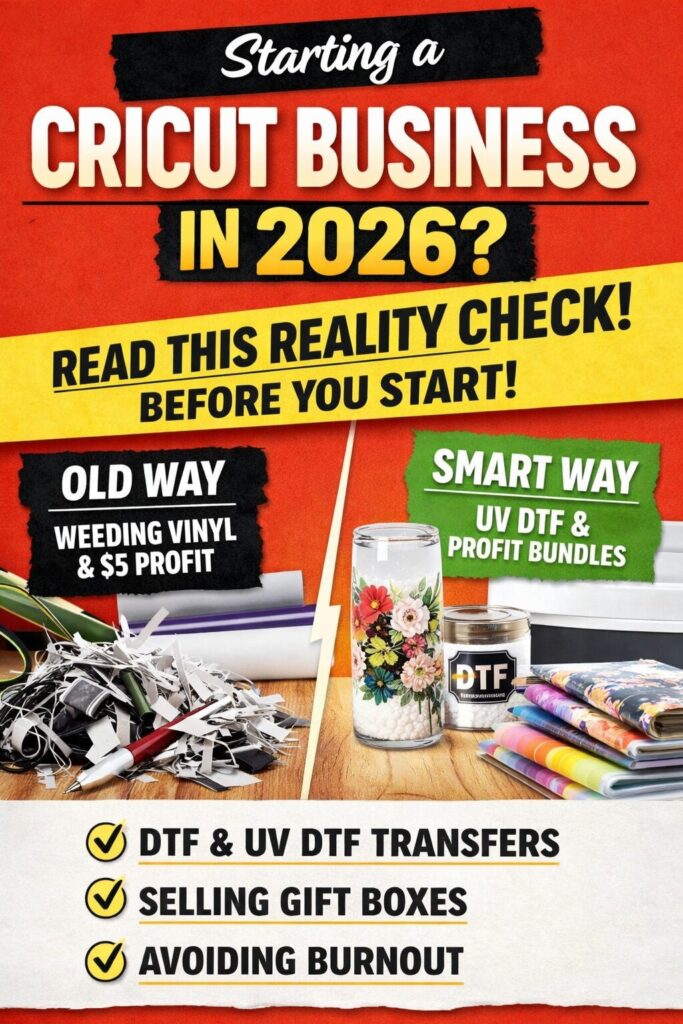
If you’re thinking about starting a Cricut business in 2026, I need you to pause for a moment. Not because you can’t succeed—but because most of the advice you’ll find online is outdated and quietly leading people straight into burnout.
The Cricut business model that worked in 2020 or 2022—cutting vinyl by hand, weeding every order, selling single $20 items—is no longer sustainable if your goal is real profit and freedom. What it creates instead is a minimum-wage job you can’t take a break from.
This article is a reality check. Not to discourage you—but to save you time, energy, and money before you start down the wrong path.
Jump to Sections in this Post
The “3 AM” Cricut Reality Most People Don’t Show
Many people imagine a Cricut business as creative, flexible, and relaxing. What they don’t imagine is being up at 3 AM weeding tiny letters off vinyl because a customer ordered ten shirts with layered designs.
That’s the truth of the old Cricut business model. If your business depends on your hands doing every step—cutting, weeding, layering, pressing—you haven’t built a business. You’ve built a job. And one you can’t outsource, automate, or walk away from.
If you want to be profitable in 2026, three major shifts need to happen.
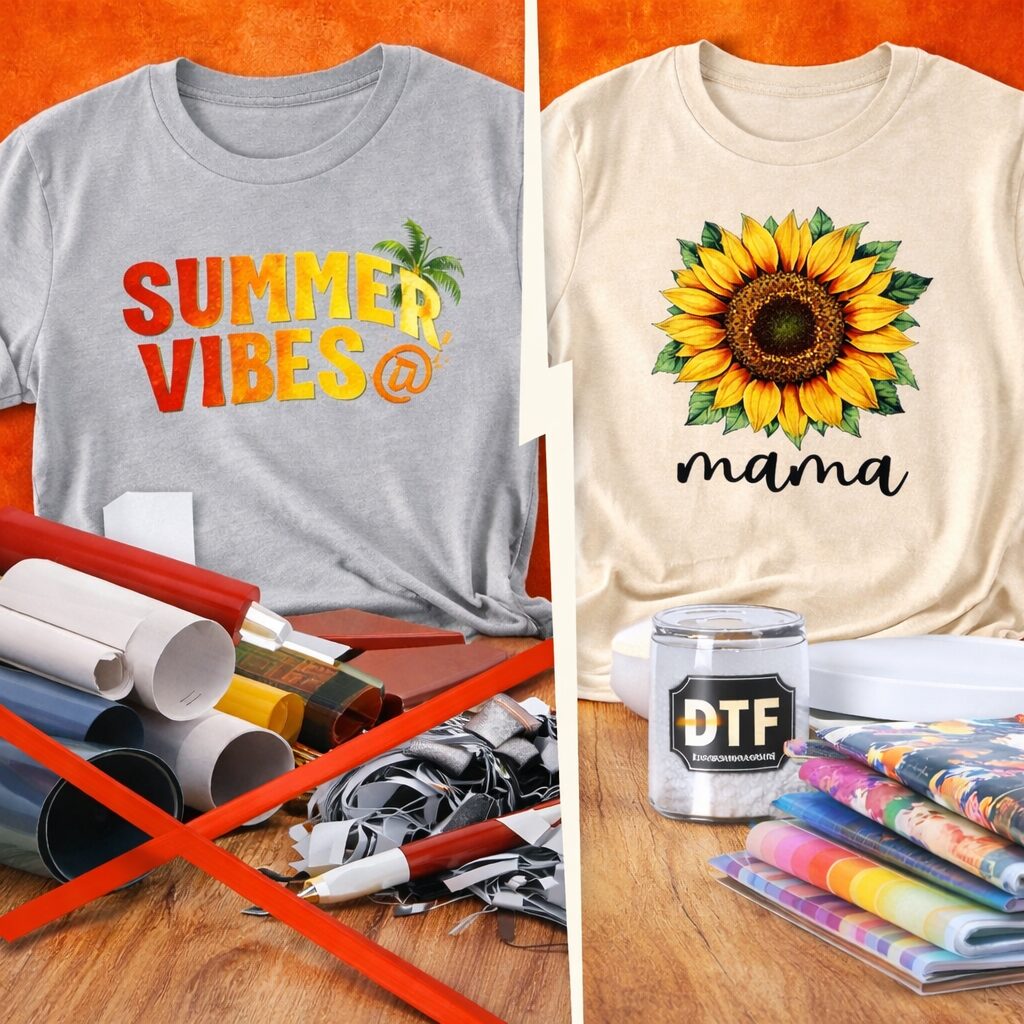
Reality #1: Vinyl Is for Hobbyists — DTF Is for Business
Here’s the hard truth: vinyl is too slow for volume.
If you receive an order for 10 “Family Vacation” shirts and each one requires cutting, weeding, and layering multiple colors of HTV, you’ve already lost money before you press the first shirt.
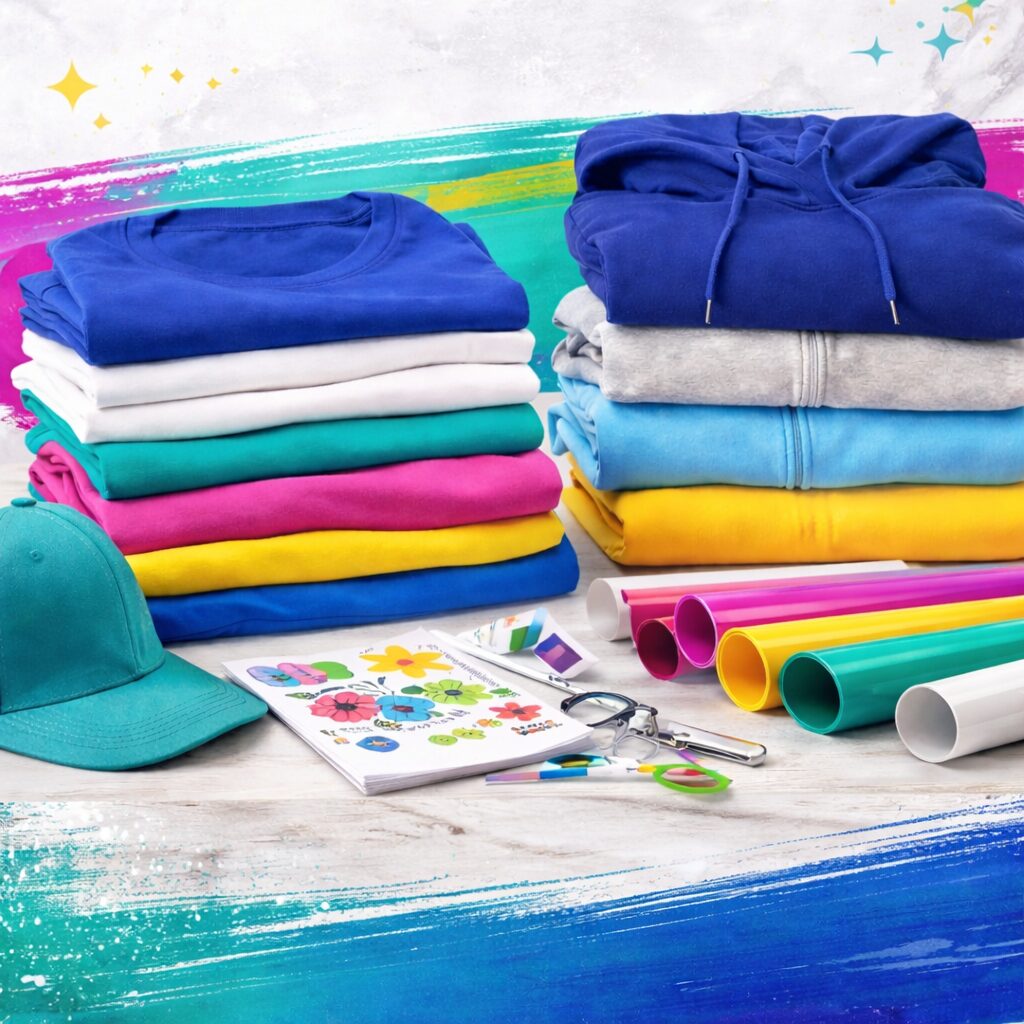
This is why serious business owners are switching to DTF (Direct to Film) transfers.
DTF transfers allow you to:
- Press once and be done
- Use full-color designs and photos
- Skip cutting and weeding entirely
- Produce shirts faster and more consistently
- Offer higher-quality results than HTV
DTF transfers are printed by a supplier and shipped ready to press. You’re outsourcing the slowest part of the process so you can focus on what actually makes money—selling.
This doesn’t mean your Cricut is useless. It’s still great for prototyping, samples, and personal gifts. But for customer orders? DTF is how businesses scale without burning out.
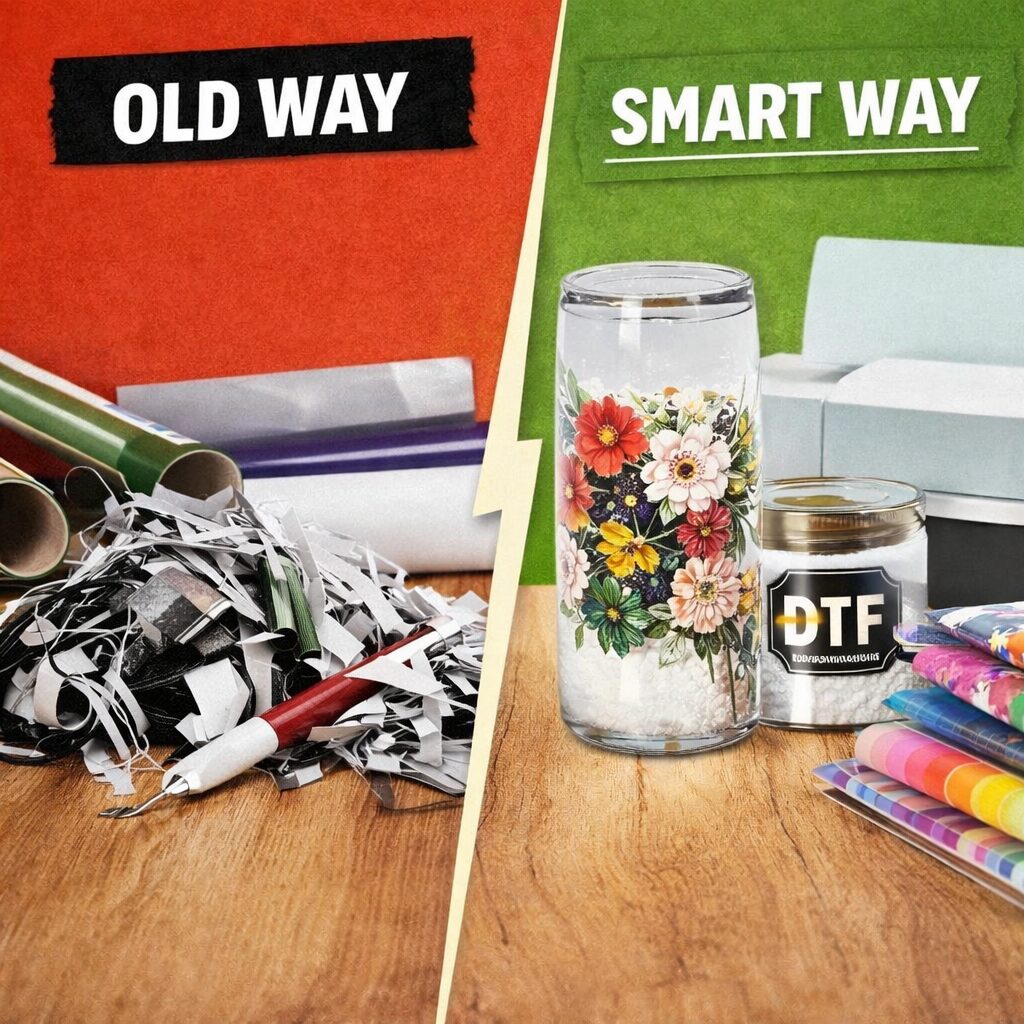
Reality #2: Stop Epoxying Cups — UV DTF Changed Everything
If you’re making drinkware and still fighting with lifting vinyl or waiting days for epoxy to cure, it’s time for another reality check.
UV DTF wraps have completely changed the cup-making game.
UV DTF wraps are essentially permanent, raised decals that you:
- Peel
- Stick
- Rub
- Done
No weeding.
No epoxy.
No toxic fumes.
No curing time.
In under 60 seconds, you can create a professional-looking glass can or tumbler that is waterproof, scratch-resistant, and visually competitive with mass-produced brands.
If you want to sell drinkware at scale in 2026, UV DTF isn’t optional—it’s the standard.
Reality #3: The Single-Item Trap Is Killing Your Profit
This is the most controversial advice—but it’s also the most important:
Stop selling single items.
When you sell one custom t-shirt for $25, here’s what actually happens:
- Platform fees eat part of the sale
- Materials cost money
- Packaging costs money
- Shipping supplies cost money
Your real profit? Often $7–$10.
To make $4,000 a month, you’d need hundreds of individual customers. That’s exhausting, unsustainable, and one of the biggest reasons Cricut sellers burn out.
The solution is simple but powerful:
Sell Bundles and Gift Boxes Instead
Instead of selling:
- “Bride T-Shirt” → $25
Sell:
- “Bachelorette Party Box” → $75
Include:
- A shirt (DTF)
- A UV DTF cup
- A tote bag or accessory
Now:
- One customer replaces three
- Shipping is paid once
- Packing happens once
- Profit increases without extra labor
This is how handmade businesses scale without working longer hours.
The 2026 Cricut Business Model: Work Smarter, Not Harder
Starting a Cricut business in 2026 isn’t about hustling harder or mastering every manual technique. It’s about strategy.
Successful sellers:
- Let machines and suppliers do the labor
- Use DTF and UV DTF to eliminate bottlenecks
- Sell high-value bundles instead of low-margin singles
- Protect their time as much as their creativity
The Cricut dream isn’t dead—but the old way of doing business is.
If you’re willing to adapt, think bigger, and price smarter, a Cricut-based business can still be profitable. But only if you build it like a business—not a craft hobby that accidentally turned into a job.
Final Thoughts
If you’re serious about starting a Cricut business in 2026, the question isn’t “Can I make money?”
It’s “Can I make money without burning myself out?”
The answer depends on whether you’re willing to stop weeding, stop underpricing, and stop selling your time one item at a time.
Work smarter. Build strategically. And let your creativity support your life—not consume it.