This post may contain affiliate links. This means if you click a link and purchase an item that I recommend, I will receive an affiliate commission at no extra cost to you. All opinions are my own.
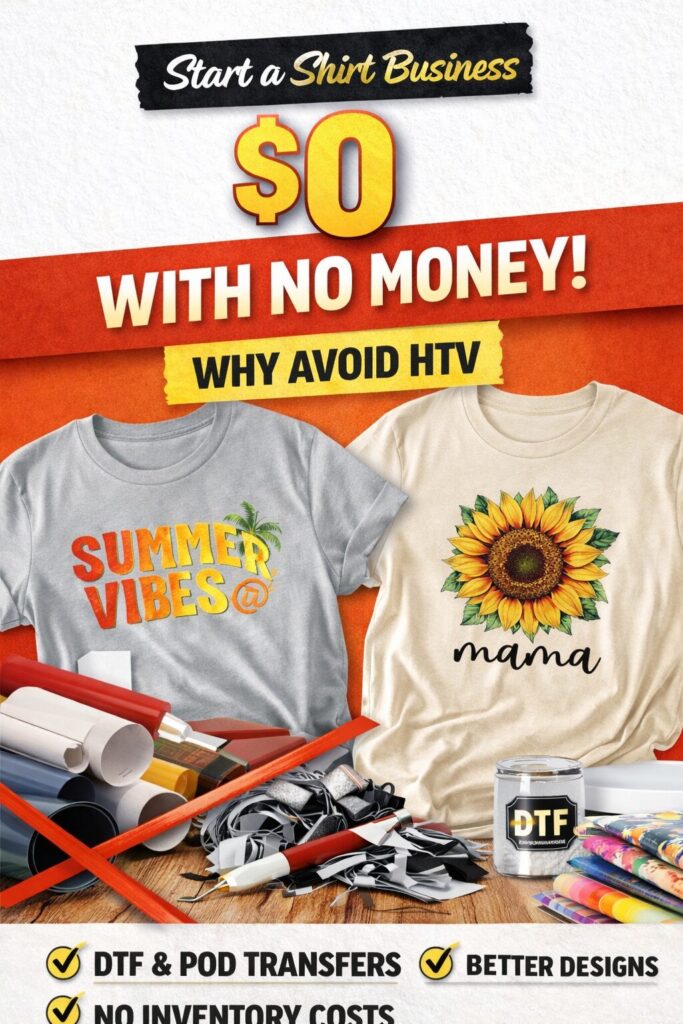
If you’ve been told that the only way to start a shirt business is by buying rolls of heat transfer vinyl (HTV), a cutting machine, and spending hours weeding designs—you’ve been given outdated advice. The truth is, you can start a shirt business with $0, and the key is moving away from HTV-based production altogether.
In this article, we’re breaking down why HTV is no longer the best option for shirt businesses, what to use instead, and how modern creators are launching shirt brands without upfront inventory or equipment costs.
Jump to Sections in this Post
- Why HTV Is Holding Shirt Businesses Back
- The New Way to Start a Shirt Business with No Money
- Why DTF Beats HTV for Shirt Businesses
- How to Actually Start a Shirt Business with $0
- Why Selling Single Shirts Is Still a Trap
- What Your Cricut Is Still Good For
- The Mindset Shift That Makes This Work
- Final Thoughts
Why HTV Is Holding Shirt Businesses Back
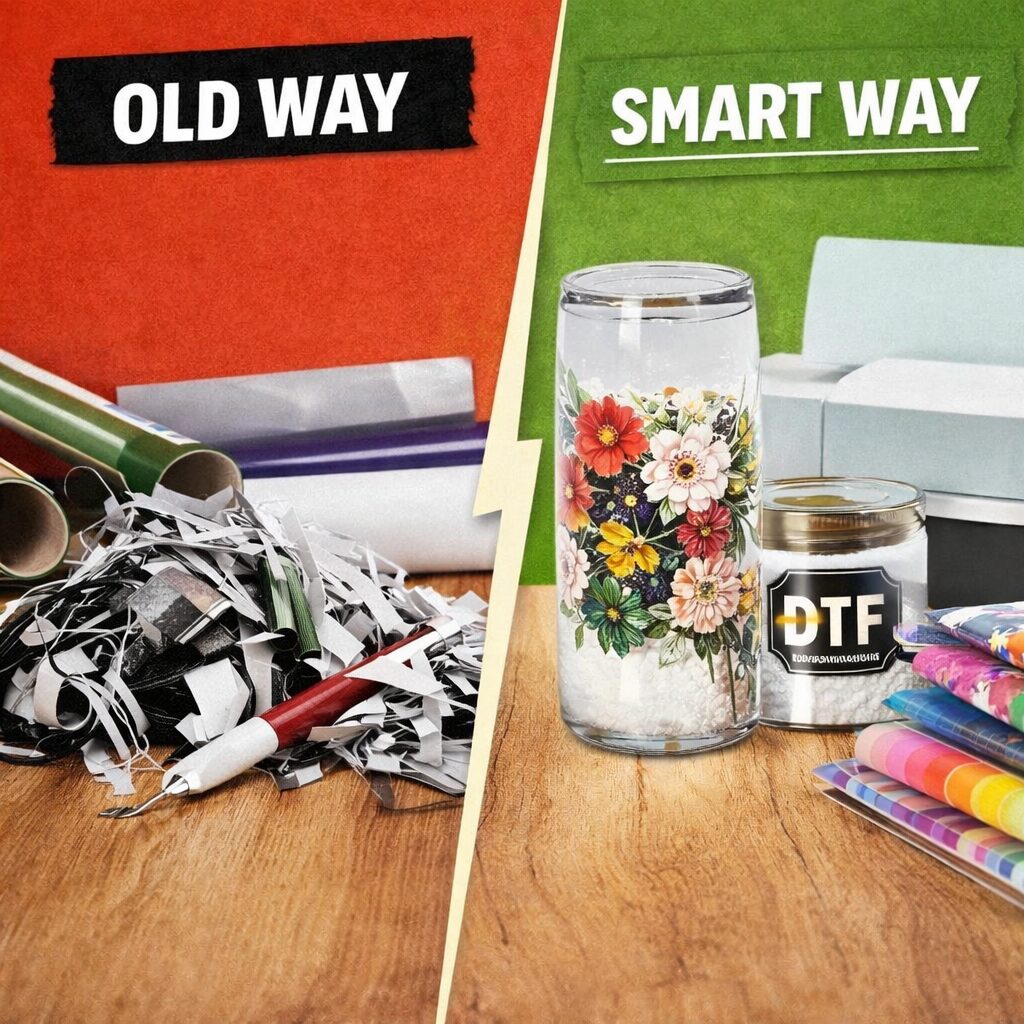
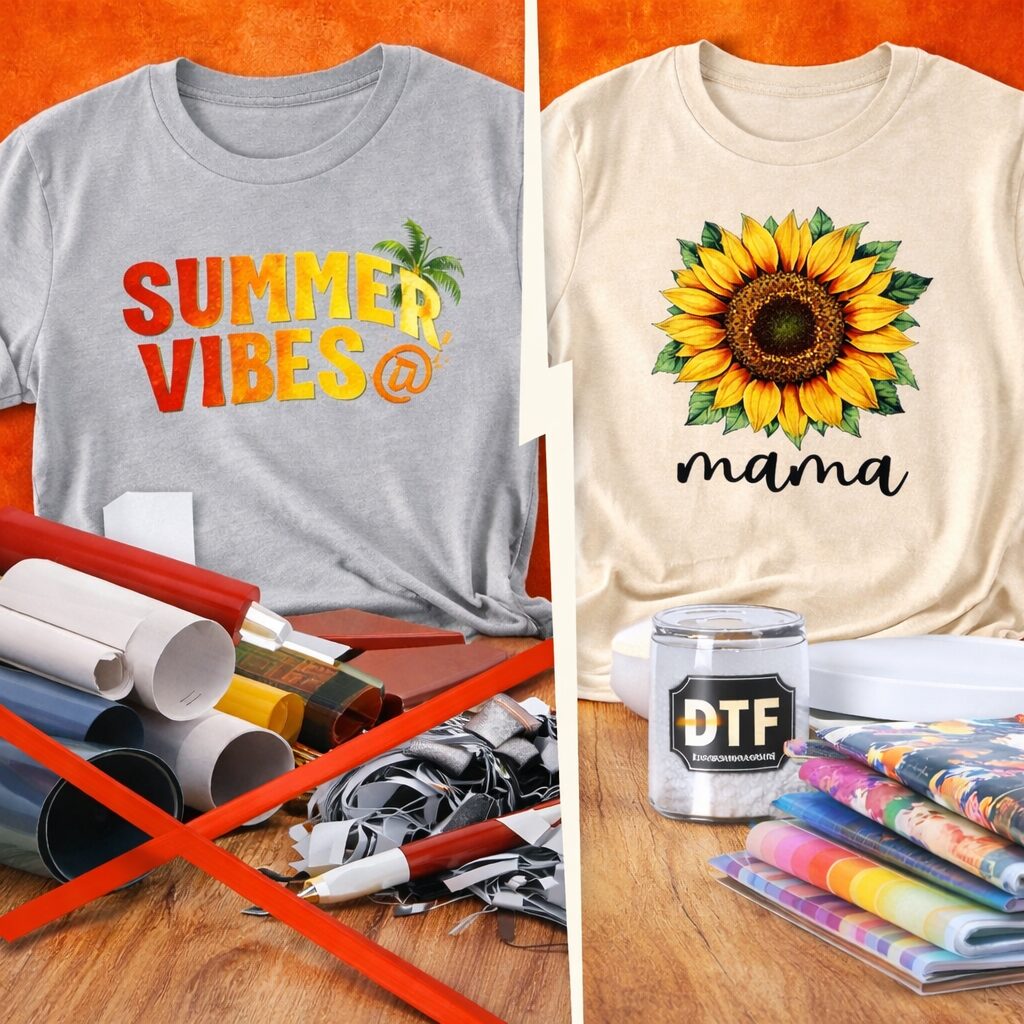
HTV has long been the go-to method for custom shirts, especially for Cricut users. While it works for hobby crafting and personal gifts, it creates serious problems when you try to scale.
Here’s why HTV becomes a bottleneck:
- Time-intensive labor: Every shirt requires cutting, weeding, layering, and pressing.
- Low profit margins: The more time you spend on one shirt, the less you earn per hour.
- Limited design options: HTV struggles with full-color images, photos, and detailed artwork.
- Burnout risk: Repeating the same manual process for every order quickly becomes exhausting.
If your business depends on how fast your hands can weed vinyl, you don’t have a scalable business—you have a job.
The New Way to Start a Shirt Business with No Money
To start a shirt business with no money, you need to separate designing from manufacturing. Instead of making every shirt yourself, you can use production methods that require zero upfront equipment.
Two options dominate modern shirt businesses:
1. Print-on-Demand (POD)
Print-on-demand services allow you to upload designs, list products, and only pay when a customer places an order. The provider (Printful, Printify, etc.) prints and ships the shirt for you.
Why POD works for $0 startups:
- No inventory
- No equipment
- No weeding or pressing
- No upfront costs
You can start with nothing more than design software (like Canva) and an online storefront.
2. DTF Transfers (Without Owning a Printer)
DTF (Direct to Film) transfers are pre-printed designs you can order individually. Instead of buying a DTF printer, you upload your design to a supplier, order transfers as needed, and press them using borrowed or outsourced equipment—or even a local press service.
This approach lets you:
- Avoid printer costs
- Skip vinyl entirely
- Produce professional, full-color shirts
Why DTF Beats HTV for Shirt Businesses
Moving away from HTV isn’t just about saving time—it’s about building a business that makes sense financially.
DTF transfers:
- Apply in one press
- Support full-color designs
- Feel softer and last longer than HTV
- Eliminate cutting and weeding
- Are ideal for bulk orders
When you remove the slowest step in production (weeding), you instantly increase your earning potential.
How to Actually Start a Shirt Business with $0
Here’s a realistic path to get started:
Step 1: Design First, Produce Later
Create shirt designs using free tools like Canva. Focus on niches that buy repeatedly:
- Events (birthdays, reunions, bachelorette parties)
- Businesses and organizations
- Seasonal collections
You don’t need a machine to design.
Step 2: List Before You Make
Use platforms like Payhip, Square, or social media to list your designs before producing anything. This validates demand without spending money.
Step 3: Fulfill with POD or DTF
When an order comes in:
- Use a POD service to print and ship
- Or order a DTF transfer and have it pressed locally or through a partner
You only pay after you’ve been paid.
Why Selling Single Shirts Is Still a Trap
Even without HTV, selling single shirts keeps margins tight. The smartest sellers pair modern production with bundling strategies.
Instead of selling:
- One shirt for $25
Sell:
- A themed shirt + tote + cup bundle for $65–$85
Bundling:
- Increases order value
- Reduces customer volume needed to hit income goals
- Makes fulfillment more efficient
This strategy works regardless of whether you use POD or DTF.
What Your Cricut Is Still Good For
Moving away from HTV doesn’t mean abandoning your Cricut completely. It’s still useful for:
- Prototyping designs
- Personal gifts
- One-off projects
- Non-apparel items like packaging, tags, or signage
The key shift is not relying on it for every customer order.
The Mindset Shift That Makes This Work
Starting a shirt business with $0 requires a mindset change:
- You are a brand builder, not a production line
- Your job is to design, market, and sell
- Production should be outsourced whenever possible
The most profitable shirt businesses today aren’t the ones doing everything by hand—they’re the ones making smart decisions about time, tools, and strategy.
Final Thoughts
If you want to start a shirt business with no money, HTV is not your friend. It’s slow, labor-heavy, and designed for hobbyists—not scalable businesses.
By moving away from vinyl and embracing POD or DTF-based workflows, you can:
- Start with $0
- Avoid burnout
- Offer better products
- Build a business that grows without chaining you to a heat press
The future of shirt businesses isn’t about who can weed the fastest—it’s about who can work the smartest.